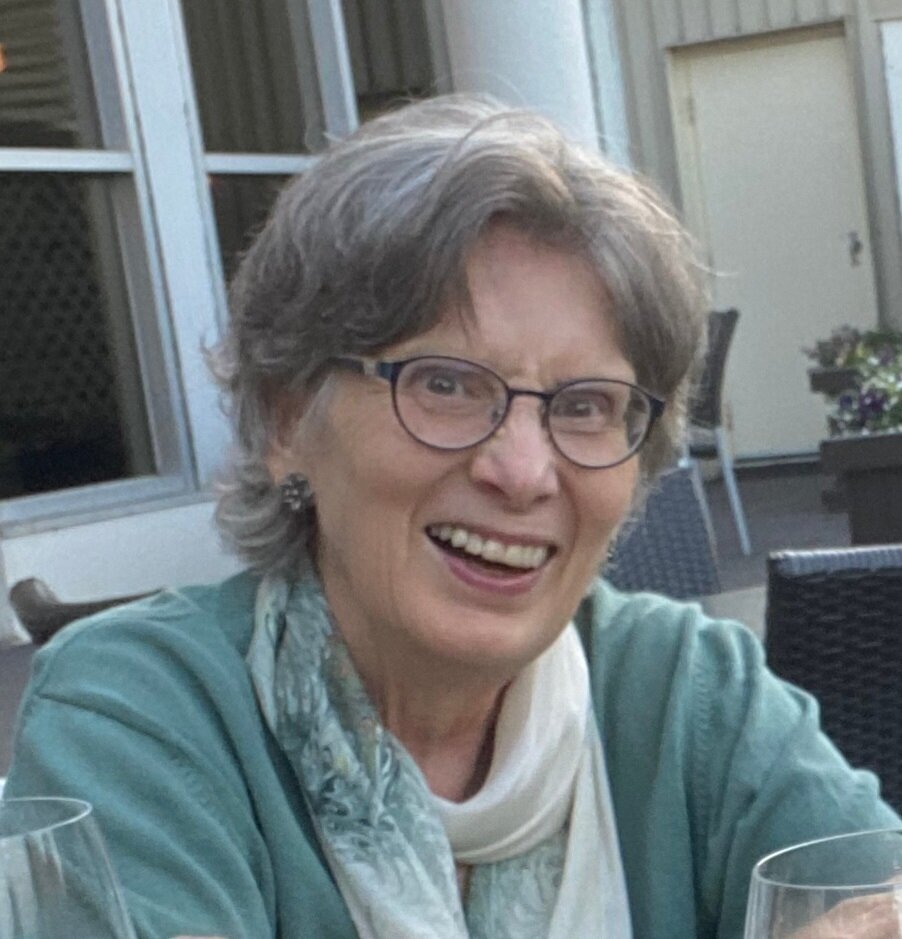
Dynamism and determination, wisdom and warmth: the late Elizabeth Mancke (1954-2023) exuded each of these positive attributes as well as countless others, as anyone who had the good fortune of knowing her can readily attest. Her recent passing is a massive loss for the many communities to which she contributed, whether as a pathbreaking historian, an engaged citizen, or, as was frequently the case, both. Composed by scholars and friends of Elizabeth’s from across the United States and Canada, the following reflections offer a glimpse of the breadth and profundity of her influence, and of the brilliant legacy she leaves to posterity. Cumulatively, they are the first in a two-part series; the second will appear on Thursday. Please feel free to provide your own reflections on Elizabeth’s life and work below.
I met Dr. Mancke in January 2017, when I took her graduate seminar in historical writing. She was one of my MA thesis examiners, and editor par excellence. In 2018, she became my PhD advisor. It was in this latter role that I got to know Elizabeth better – as a wise scholar, a human being in all her wonderful complexity, and as friend and confidante. My time with Elizabeth was too brief, barely six and a half years, but her positive influence on me will last a lifetime. Requiesce in pace, amica mea.
Ian Baird
Elizabeth was an incredible colleague and mentor: I’m forever grateful for her empathy, integrity, and intellectual passion. What made her such an exceptional professor and person is that, unlike most of us, Elizabeth was never either/or. She was both kind and tough, ambitious yet relaxed, serious yet playful. Elizabeth was both a wonderful talker and a sensitive listener, committed equally to research and teaching. Her work made major contributions to the international histories of the Atlantic world yet was rooted deeply and unapologetically in community and region. Unlike most historians of colonialism, she valued both transnational and local perspectives. Elizabeth was one of the few historians who maintained equally strong connections across American and Canadian academic networks. She was committed to people as much as principles and to community as much as academia. Elizabeth was one of the smartest people I’ve ever known, but she never made others feel inferior. She made me and countless others a better historian and person.
Jerry Bannister
When my MA advisor, David Philips, died suddenly on holiday in Queensland, Australia, one of his former Ph.D. students eulogized him by saying that his death was akin to the destruction of the Library of Alexandria. I admired the depths of his knowledge and mourned his loss, but, for me, while that ancient library of wisdom certainly was battered, it still stood.
With Elizabeth Mancke’s death, both the Library of Alexandria has been destroyed beyond repair and the pole star has been extinguished permanently from the sky. Such is the magnitude of her loss in my life. Like Polaris, Elizabeth had always been steadfast and steady, guiding my intellectual path in her gentle, ever-encouraging way. Unlike many of her other graduate students, she and I never lived in the same place. I came to her guidance and mentorship late in my doctoral journey. I had moved from Canada to the United States and wrote my dissertation in isolation. My original doctoral advisor allowed me the gift of freedom with little pressure to finish. I spent longer than I care to admit writing my 500-page tome. When Elizabeth took me on as her student, following the retirement of my original advisor, I had almost decided to quit my program. I had two small children and a Faculty appointment at a US institution. In a marathon four-hour phone call, she convinced me to finish it.
After I defended in December 2019, I believed that there would be an end to our phone calls and emails. But, every time I would ring, she would pick up and we’d talk for hours. If both of us did not have time to talk, we’d chat on Facebook messenger. We’d talk about my work and her work, my students and her students, my life in academia and her life in academia. We talked through the reshaping of my dissertation into a monograph–a monograph that she will now never read. “I eagerly await your next report,” she wrote often. I told her everything, always. We even spent a blissful half hour chatting online while I sat in the reading room of the Bibliothèque nationale de France in Paris. “Have you seen any references to the Gulf of St. Lawrence?” she asked. I’d get the next set of volumes pulled by the retrieval staff and write back or send pictures. By June, we talked every day. I’d send her my finds and she’d tell me how amazing they were.
I looked forward to visiting her in Fredericton in July. But I came three days after she was admitted to the hospital. I visited her there and I am happy that I did. When I came home, I thought that I would see Elizabeth in the fall for her Gulf Project Workshop in PEI. The workshop moved from Fall to Spring. She went for treatment and appeared to be doing well. And then, the worst happened and the guiding light of my life burnt out.
In a way, I am lucky. So much of my relationship with Elizabeth has been preserved in chat logs and emails. I have not yet had the fortitude to re-read her messages. But, even though she is gone, she and I will always share this history. Even in death, her preserved guidance and brilliant mind will shine on in my life, helping me navigate the path ahead, even though I now must walk it alone again.
Kelly K. Chaves
Everyone knows that Elizabeth Mancke was an exceptional scholar. As we’re sure many others will testify, she was also a role model, confidante, and very dear friend. Working collaboratively with Elizabeth, whether through collected volumes or one-off articles, highlighted both her limitless energy as well as her limitless generosity. It revealed a level of academic dedication and precision to which we can only aspire. But, despite the dozens of projects she seemingly juggled, Elizabeth always had time for those concerns that make up the rest of our lives: whether to lend a sympathetic ear, offer some sage advice, or talk through a problem over a slice of her delicious homemade pie. Our lives are where they are today in no small part thanks to Elizabeth.
Upon learning of Elizabeth’s passing, we revisited some of those projects we worked on together. With absolute certainty we can say that those projects are better because Elizabeth had a hand in them. But, more than that, we can also say with absolute certainty that our lives are better for having had Elizabeth’s presence and friendship in them. We’re going to miss Elizabeth terribly.
Colin Grittner and Stéphanie O’Neill
Elizabeth was a welcoming, humorous, and wonderful conversation partner. I first met her at the Violence and Social Order Workshop in Fredricton, where I was struck by her capacious interests. Her sincere wish to contribute to my thinking and to have me contribute to her project was critical to a young PhD student. Over the next few years, I continued to correspond with her and frequently stopped in Fredricton to share a meal and glass of wine. She was so generous. I have been enriched by her intellectual dedication and commitment to humanity. The model of her generous mentorship and warm collegiality remains with me. Thank-you Elizabeth.
Max Hamon
“In the United States there is a sense that you can derive good from violence. And then that becomes part of the American myth.” It was September 2020 and Elizabeth Mancke was speaking via zoom to my British North America students. Those remarks resonated enough to show up in the December exams and no doubt resonated even more after the events of early January 2021 made her so prescient and so urgently needed. The things Elizabeth knew were acutely worth knowing and listening to her think aloud has been one of my greatest pleasures of the last decade. Such a terrible loss.
Elsbeth Heaman
Elizabeth Mancke was a brilliant, hard-working scholar who saw connections between everyday occurrences and larger trends related to power, policy, and culture. She had a rare gift for translating complex ideas and relationships into coherent and elegant prose. I had the privilege of working with her on a number of innovative projects and greatly valued her insatiable curiosity and wise counsel. Beyond her contributions to knowledge and the larger field of early Canadian and North American history, Elizabeth stood out as a tireless advocate for graduate students and for positive change in academic culture. She took the time to get to know people, to understand their concerns, and would stand by those who needed support. In other words, she fostered community in its best sense and emphasized serving others. While we will miss her terribly, her influence and example will persevere in those who knew her and were changed for the better by her friendship and mentorship.
Greg Kennedy
Elizabeth Mancke saved me.
And I know I am not alone – it’s what she did.
While in Ohio, she welcomed me into her home (mostly to her front porch) as well as her office to chat about projects, people and life. These conversations continued at antique and farmer markets, as well as forest trails. The PhD was hard, and she was forever my champion.
Elizabeth continued to provide her support in various ways beyond the Ohio years. She visited us in Saskatchewan and later, welcomed my entire family to New Brunswick for our usual “porch chats.” My kids dipped their feet in her beloved Atlantic Ocean for the first time holding her hand. I am forever grateful for her brilliance, guidance, and love.
Kathryn Labelle
These reflections are being cross-posted with our friends at the Acadiensis Blog.
 Borealia
Latest Comments